
Making a flavorful pasta meal can feel time-consuming, especially on busy days when you want something fresh and satisfying without spending hours in the kitchen. Many store-bought sauces are either too heavy or lack the vibrant taste of homemade ingredients, leaving meals bland and uninspiring.
This quick pesto pasta recipe solves that problem by combining simple, fresh ingredients into a creamy, aromatic sauce that clings perfectly to your pasta. Ready in just 25 minutes, it gives you a restaurant-quality dish at home, saving time while delivering big on flavor.
What Makes This Pesto Pasta So Delicious
This pesto pasta recipe is full of fresh, bright flavors that make it exciting to eat. The combination of basil, garlic, Parmesan, and olive oil creates a sauce that is fragrant and rich without being heavy. It is a dish that feels both simple and special, perfect for lunch or dinner.
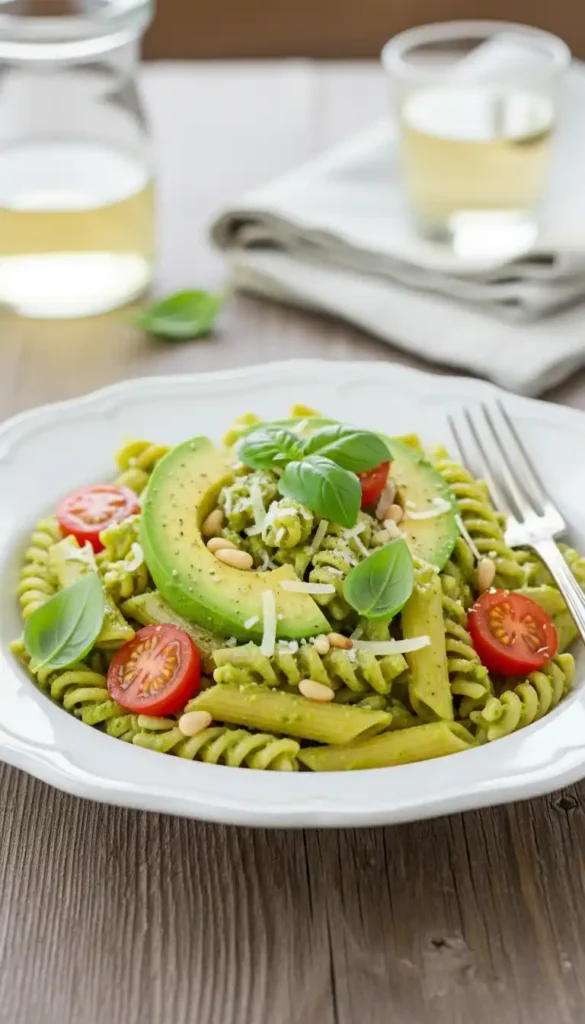
Making this pasta is quick and stress-free. It takes only 25 minutes from start to finish. The creamy sauce coats the pasta evenly, giving each bite a smooth and satisfying texture. It also pairs well with other favorite dishes like Birria Tacos, adding variety and extra flavor to mealtime.
Ingredients for Pesto Pasta
| Ingredient | Quantity / Notes |
| Pasta | 300g (spaghetti, penne, or fusilli) |
| Fresh Basil Leaves | 2 cups |
| Garlic Cloves | 2–3, peeled |
| Pine Nuts | 1/4 cup |
| Parmesan Cheese | 1/2 cup, grated |
| Olive Oil | 1/2 cup |
| Salt | To taste |
| Black Pepper | To taste |
| Lemon Juice | 1 tsp |
Nutrition Table (Per Serving)
| Nutrient | Amount |
| Calories | 420 kcal |
| Protein | 12 g |
| Fat | 22 g |
| Carbs | 45 g |
| Fiber | 3 g |
| Calcium | 150 mg |
| Iron | 2 mg |
How Do You Make pesto pasta recipe Step by Step?
Making pesto pasta at home is simple and quick, and following a few easy steps ensures a flavorful, restaurant-quality dish. Using fresh ingredients and the right technique brings out the best taste and texture in every bite. Here’s how to make it step by step:
Step 1: Boil the Pasta
Bring a large pot of salted water to a boil. Add the pasta and cook until al dente according to the package instructions. Drain the pasta, reserving a little pasta water for later use.
Step 2: Prepare the Pesto Sauce
In a food processor, combine fresh basil leaves, garlic, pine nuts, and grated Parmesan cheese. Blend until the mixture is finely chopped and well combined.
Step 3: Add Olive Oil and Seasoning
Slowly drizzle in olive oil while blending until the sauce is smooth and creamy. Season with salt, black pepper, and optional lemon juice to taste.
Step 4: Combine Pasta and Pesto
Place the cooked pasta in a large bowl. Pour the pesto sauce over it and toss until the pasta is evenly coated. Add a splash of reserved pasta water if the sauce needs loosening.
Step 5: Serve and Garnish
Transfer the pesto pasta to serving plates. Garnish with extra Parmesan, pine nuts, or fresh basil leaves. Serve immediately for the best flavor.
Helpful Cooking Tips for Perfect Pesto Pasta
Creating the perfect pesto pasta is easier when you follow a few simple cooking tips. Small adjustments in preparation and seasoning can make your pasta more flavorful, creamy, and balanced every time.
- Use fresh, high-quality basil leaves for the best flavor and vibrant green color in your pesto.
- Toast the pine nuts lightly before blending to bring out a richer, nuttier taste.
- Reserve some pasta water to adjust the sauce consistency and help it coat the pasta evenly.
- Taste and season the pesto gradually with salt, pepper, and a squeeze of lemon juice to balance the flavors.
- Serve immediately after tossing the pasta with pesto to enjoy the sauce at its freshest and most aromatic.
How Should You Serve Pesto Pasta for the Best Taste?
Pesto pasta is best served fresh and warm, straight from the stove to the plate, and I sometimes pair it with a Caprese Salad Recipe for a complete, refreshing meal. You can garnish it with extra-grated Parmesan, a few whole basil leaves, or lightly toasted pine nuts to add a touch of elegance and texture. For a heartier meal, serve it alongside grilled chicken, shrimp, or roasted vegetables.
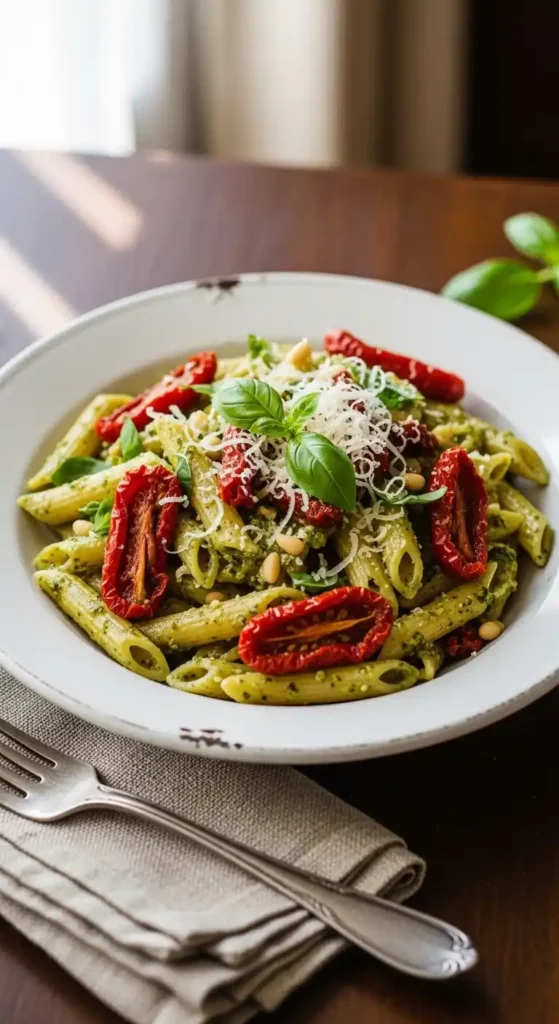
This pasta also pairs wonderfully with a light salad or garlic bread for a complete meal. You can drizzle a little extra olive oil on top before serving to enhance the flavor, and a squeeze of lemon juice can brighten the dish even more. It’s simple, flavorful, and perfect for both casual family dinners and special occasions.
Make Ahead Instructions for Pesto Pasta
Pesto pasta can be prepared ahead of time to save effort on busy days. With the right storage and reheating methods, you can keep it fresh and flavorful until ready to serve.
- Cook the pasta and prepare the pesto separately, then store them in airtight containers in the refrigerator for up to 2 days.
- Toss the pasta with a little olive oil before storing to prevent it from sticking together.
- Keep the pesto sauce in a small airtight jar or container, and cover the surface with a thin layer of olive oil to maintain its bright color and freshness.
- Reheat the pasta gently in a pan over low heat, adding a splash of reserved pasta water or olive oil to loosen the sauce.
- Combine the reheated pasta with the pesto just before serving to retain the best flavor and texture.
How to Store and Reheat Pesto Pasta
Proper storage and reheating help keep pesto pasta fresh and flavorful. Cooked pasta should be stored in an airtight container in the refrigerator for up to two days. The pesto sauce should be kept separately with a thin layer of olive oil on top to preserve its color and taste.
When ready to eat, reheat the pasta gently over low heat. Add a little reserved pasta water or olive oil to loosen the sauce. Combine the pesto with the warmed pasta just before serving for the best flavor and texture.
Recipe Timing
| Task | Time |
| Prep Time | 10 minutes |
| Cook Time | 15 minutes |
| Total Time | 25 minutes |
Common Mistakes to Avoid When Making Pesto Pasta
Making pesto pasta recipe is simple, but a few common mistakes can affect the flavor and texture. Avoiding these errors ensures a creamy, balanced, and delicious dish every time.
- Using old or wilted basil can make the pesto taste bitter. Fresh basil gives a bright and vibrant flavor.
- Overcooking the pasta can make it mushy. Mushy pasta also prevents the sauce from coating properly.
- Adding too much olive oil at once can make the pesto too thin. This can also make it greasy instead of smooth and creamy.
- Skipping the reserved pasta water can make the sauce too thick. A little pasta water helps achieve the right consistency.
- Preparing and storing pesto pasta too far in advance can cause it to lose flavor and color. It is best enjoyed fresh or shortly after making.
Why This Pesto Pasta Recipe Is a Must-Try?
This recipe is a must-try because it’s simple, fresh, and full of flavor. With just a few ingredients, you can create a restaurant-quality meal at home that’s satisfying and comforting. The vibrant basil, creamy Parmesan, and nutty pine nuts come together perfectly in every bite.
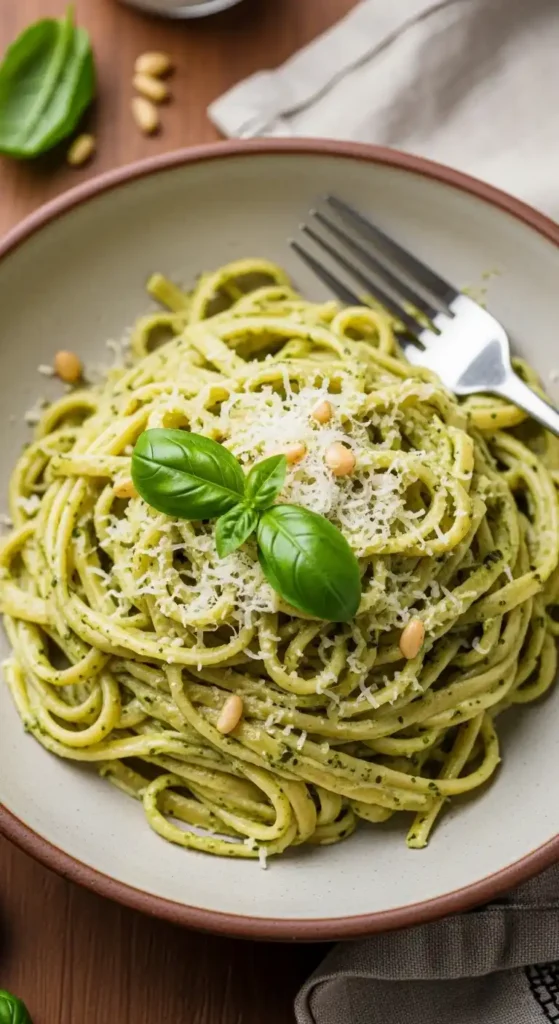
It’s also perfect for any occasion. You can enjoy it as a quick weeknight dinner, a light lunch, or even serve it to guests without stress. Its easy preparation, fresh taste, and flexibility make it a recipe you’ll return to again and again.
Conclusion
Pesto pasta is a simple yet flavorful dish that anyone can make at home. With fresh ingredients like basil, garlic, pine nuts, and Parmesan, you get a meal that feels both special and comforting. It’s quick to prepare, making it perfect for busy days or last-minute meals.
This recipe is easy to adjust and always satisfying. You can serve it plain, add vegetables, or pair it with protein based on your taste. Try this pesto pasta recipe and enjoy a fresh, homemade pasta experience any day of the week.